
Ground, then Glass by Ben Klocek
Educating for Presence in a Screen-Lit World
The rapid pace of technological development challenges human consciousness. Our understanding of what technology is, how to use it wisely, and its potential harms often lags behind its adoption. For many decades, Waldorf education was able to delay adoption of screens for students, by advocating for developmental readiness based on the child development understanding from Rudolf Steiner. The pandemic of 2019 changed that, when many schools were forced to teach virtually, with students as young as kindergarten on screens for several hours per day. The side effects of this were plain to see in learning loss, broken classroom connections, and mental health breakdowns of teachers and students.
As someone who has spent over two decades working in technology and seven years teaching woodworking and digital literacy in public Waldorf charter schools, I’ve witnessed firsthand the struggle to reconcile human development with screen-based learning.
The Wisdom of the Human Being
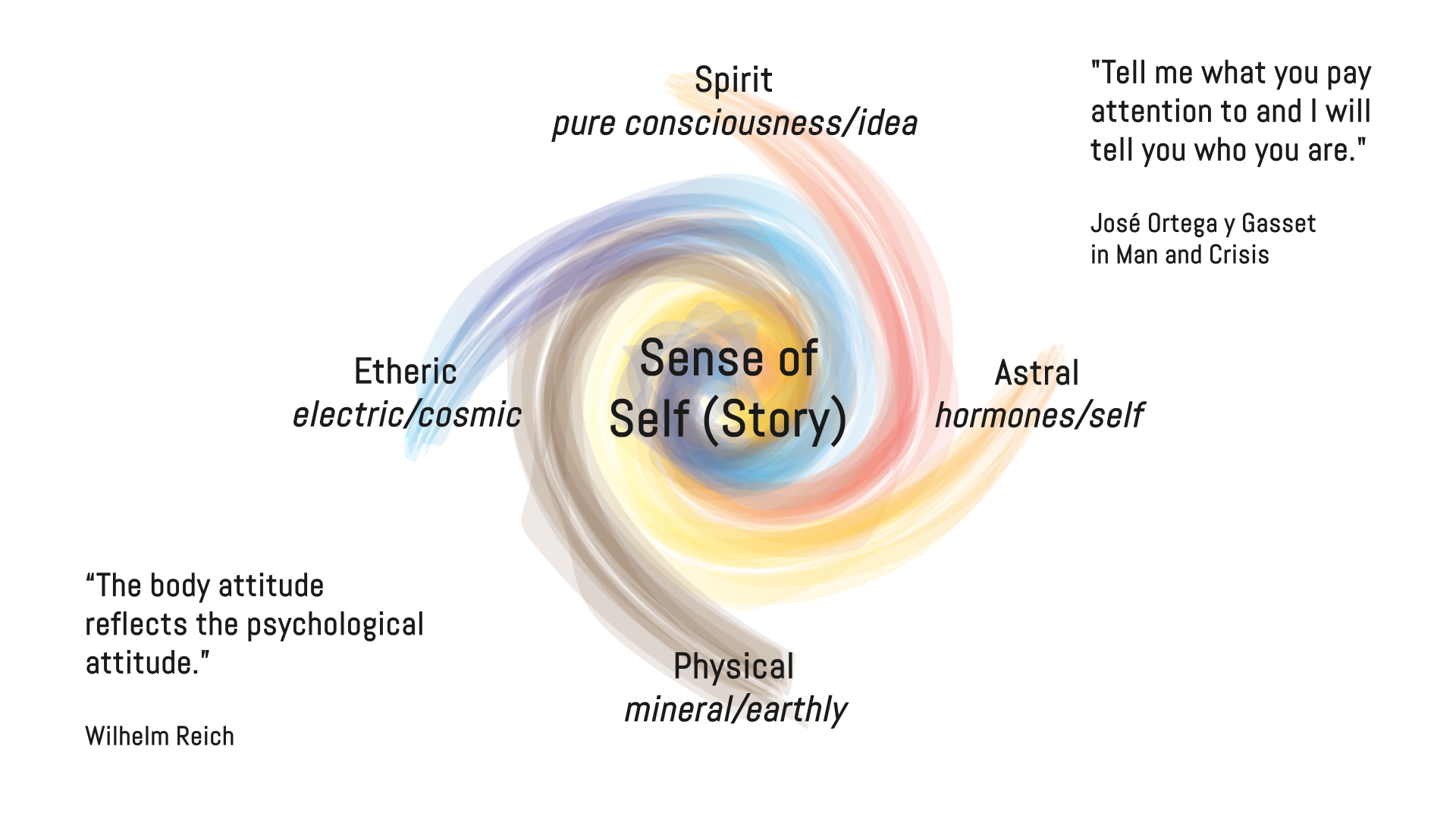
In his science of anthroposophy, the “wisdom of the human being,” Steiner describes an important element of the human being: a subtle body which he called the soul. The soul is comprised of an individual's capacity for thinking, feeling, and taking action (willing). It develops out of the genetic inheritance from the body as well as the individual's experience with the world (and Steiner would say their eternal spirit as well). The quality and content of those experiences become a part of an individual's soul. Thus, the things we focus on, the media we watch, and the technologies we use shape our soul. José Ortega y Gasset in Man and Crisis said, "Tell me what you pay attention to and I will tell you who you are."
“As the body is built up by food from the outer world, so the soul develops through the experiences afforded by the outer world.”
Rudolf Steiner, The Renewal of Education
For millennia, human beings have lived in what we could call a dynamic sensory experience warmed by interacting with physical reality and the subtle forces shaping it. Presence and grounded embodiment invite effort, friction, and responsiveness – activities that generate warmth, resilience, and a sense of inner rootedness. To be grounded is to inhabit one’s body with presence, to feel connected to the earth beneath one’s feet, to engage with the world through the senses.
In contrast, the digital reality presents a coldness and separateness. Physicist, author, and educator Ursula Franklin, described technology as creating “pseudo realities” that distance people from genuine experience. Digital reality is based on a binary, either/or reality, mediated by a flat, cold piece of glass. This has consequences for those who spend all their time there, as the resulting soul development is fragmented, hyper-accelerated, and dis-embodied.
Where Attention Goes
Makia, one of the seven core principles of the Hawaiian spiritual tradition of Huna, says that energy flows where attention goes. When soul development becomes fragmented and disembodied, it’s harder to integrate daily experiences into meaningful biography. This weakens the soul’s ability to fully connect with and enliven the physical body. As the attention is given to the digital world over the physical and spiritual worlds, the bonds to matter and spirit weaken and the digital experience will expand.
If the digital world fragments and dis-embodies the soul, then it becomes crucial to cultivate practices that re-integrate the self through physical, emotional, and spiritual presence. Steiner’s Six Basic Exercises are exceptional practices for developing inner capacities of concentration, deep listening, and embodied presence. (Explore Raising the Soul: Practical Exercises for Personal Development by Warren Lee Cohen for more.)
Waldorf education emphasizes rhythm, sensory experience, and attention training. These capacities could be seen as essential preparation for the healthy use of screen technology. Attention to rhythms, both large (as seen in the festival activities of the seasons) and small (as seen in the “in-breath/out-breath” of the classroom rhythm between intellectual activities and physical activities), prepare the students to be attendant to their own rhythms when using digital devices that are always on, tireless, and without natural rhythms.
The focus on sensory experience through activities like the arts including music, handwork, woodwork, painting, drawing, modeling, drama, and through movement classes including eurythmy and games, develop a deeper awareness of the will and feeling life arising from interaction with the outer world. A child shaping beeswax with warm fingers, or reciting poetry in rhythm with their classmates, is learning to inhabit their body and breath in a way no touchscreen can replicate.
Waldorf students build attention through memorized recitation, collaborative recall of main lesson content, and learning that integrates movement and speech – for example, tracing letters with a finger while saying the sound aloud. These activities are not just traditional or artistic – they are neurodevelopmentally aligned methods of fostering attention, resilience, and embodied intelligence. They ground children firmly in the soil of lived experience, preparing them to meet the digital world with steadiness of soul.
Regrounding
The final important lesson is one of regrounding – a return to the natural world that restores balance and integration. This is regained through regular time in nature, as described in The Nature Principle by Richard Louve, which resets the human being in body and mind through literal grounding, through inhaling rebalancing essential oils released by the plants, through time away from disruptive human-created electromagnetic fields, and many other beneficial activities. (See also Shinrin Yoku about Japanese forest bathing).
“Everything in the environment of the child that enters through the eyes, the ears, and other senses works upon the child—not only upon the senses, but upon the whole being. What is seen, what is heard, works upon the child’s physical body and becomes a force in it.”
Rudolf Steiner, Practical Advice to Teachers
These activities point toward a philosophy of prioritizing individual integration and preparation before introducing screen technology. It encourages a practice of strengthening children’s connection to the real world before introducing the digital. With this in mind, let’s revisit the common vilification of the digital in the Waldorf movement. Most Waldorf teachers, administrators, and parents use digital technology in daily life and yet many still hold the general belief that Waldorf education opposes it outright. Thus our students see that our words, “technology bad,” don’t align with our actions and a disconnect is created. As social learning theory tells us, we learn by watching others. So let's reconsider.
Its Place and Purpose
What if we began the conversation based on acknowledging that technology has its place and purpose, but its appropriate use is based on developmental readiness? “When you are older you will also have access to these technologies, but right now, your work is to learn to use your body and mind in the real world.” As the child develops, we rely on the beautiful initiation of the Waldorf curriculum for the development of body and soul, as well as introduce lessons on digital literacy as they grow older, covering digital citizenship (Grade 6), information literacy (Grade 7), and media literacy (Grade 8). Visit cybercivics.com for educators, or cyberwise.org for parents.
At home, we can model healthy habits with technology. We can embody the physical by taking care of our bodies, tend to our emotions by learning emotional literacy, settle our minds with tech-free times and places, and honor the immaterial with festivals, rites-of-passage, and quiet reflection. In a future where technology becomes more immersive and pervasive, we can raise children who are rooted before they are wired, who learn to stand on solid ground before reaching for glass. Only then can they wield the screen in service of the soul, and not at its expense.
Ben Klocek, web designer, teacher, and Sacramento Waldorf School alumni, has worked in tech for over twenty years and has been studying how our use of screen technology affects our lives. He has taught woodworking and technology in public Waldorf charter schools for over seven years. He is the father of two children, ages fifteen and seventeen, and is an avid naturalist, artist, and gardener.